Healthcare AI12 min read

Healthcare AI in Southeast Asia: Singapore, Malaysia, Philippines & Indonesia Guide

Southeast Asia is rapidly adopting healthcare AI. Learn about the unique opportunities and challenges in Singapore, Malaysia, Philippines, and Indonesia.

B

Bot MD Team

Healthcare AI Experts January 4, 2026

Southeast AsiaHealthcare AIRegional HealthcareMarket Analysis
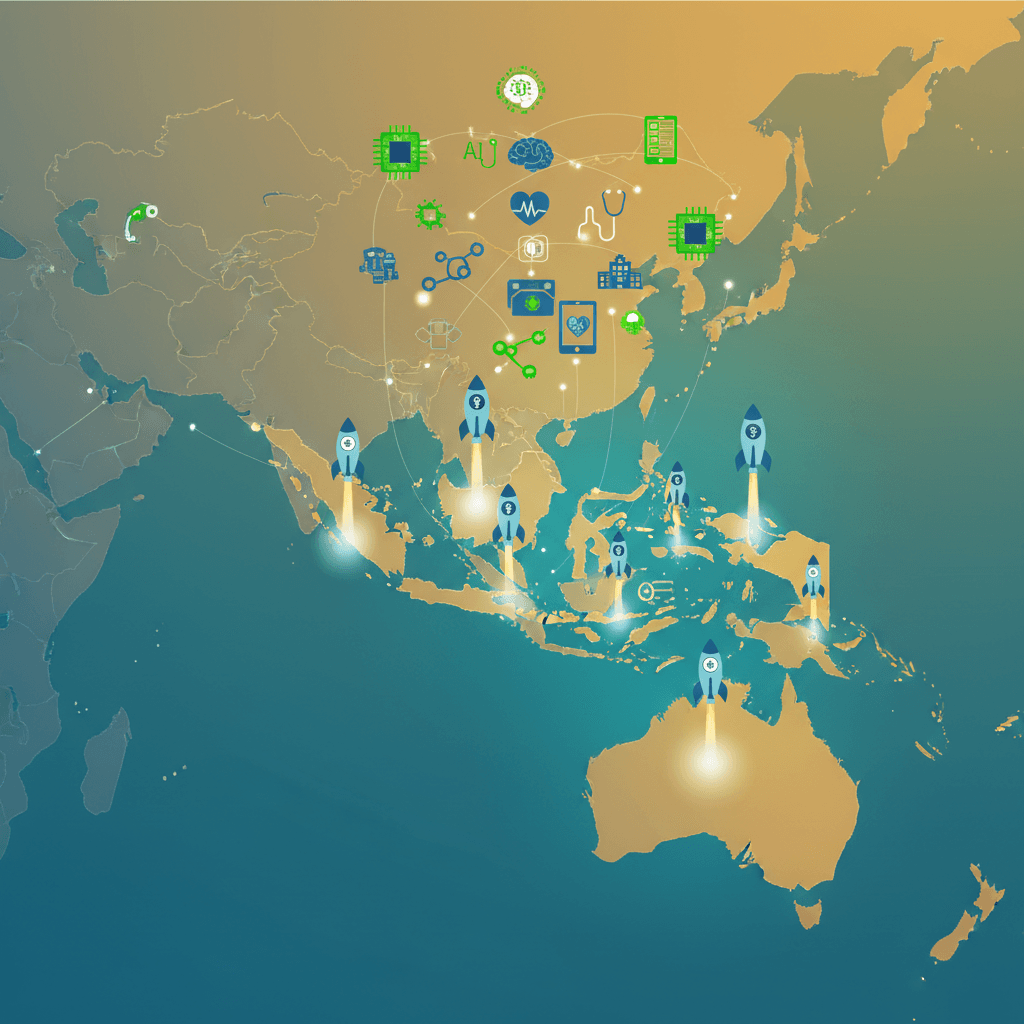
Healthcare AI adoption map across Southeast Asia

Healthcare AI in Southeast Asia: Singapore, Malaysia, Philippines & Indonesia Guide

Four countries. 500 million people. One overwhelming reality: healthcare systems are struggling to keep up.

I spent last month visiting hospitals across Southeast Asia. In Singapore, a private hospital executive showed me their AI dashboard, proudly displaying 83% of routine inquiries handled without human intervention. In Manila, a hospital group CEO admitted they lose dozens of patients daily because their call center can't answer fast enough. In Jakarta, a medical director described the impossible task of serving patients across 17,000 islands with traditional communication methods.

Same region. Same challenges. Vastly different responses.

The hospitals adopting AI aren't just surviving—they're thriving. The ones waiting are falling behind in ways that will take years to recover from.

Here's what's actually happening in each market.

Singapore: Where AI Meets Ambition

Singapore doesn't do things halfway. When the government decided healthcare needed AI, they went all in.

The Public Health Push

Synapxe, the national health tech agency, is deploying AI across public hospitals at a scale few countries can match. Their "Russel GPT" system generates patient summaries automatically. AI triage helps emergency departments prioritize cases. Remote monitoring systems keep chronic patients at home instead of in hospital beds.

But here's what's interesting: while public hospitals experiment with cutting-edge AI, private hospitals are where patient engagement AI has taken off.

The Private Hospital Advantage

When Gleneagles Singapore implemented AI-powered WhatsApp scheduling, their operations director expected modest improvements. What happened exceeded every projection:

  • After-hours bookings increased 340%
  • No-show rates dropped from 18% to 9%
  • Patient satisfaction scores hit all-time highs
  • Staff overtime declined by 35%

"We thought we were implementing a convenience feature," she told me. "We accidentally transformed our entire patient experience."

What Works in Singapore

Singaporean patients are sophisticated, demanding, and digitally native. They expect:

  • Instant responses: Waiting even 5 minutes feels unacceptable
  • Multi-language support: English, Mandarin, Malay, Tamil—depending on the patient
  • Seamless integration: They don't want to explain their history every time
  • Privacy by default: Trust is earned, not assumed

The hospitals winning in Singapore aren't just using AI—they're using it to deliver premium experiences that justify premium prices.

The Numbers

MetricSingapore Average
Smartphone penetration92%
WhatsApp daily active users84%
Willingness to use healthcare AI78%
Private healthcare market size$14 billion

Malaysia: The Sleeping Giant Awakens

Malaysia has always had world-class healthcare—the country is a medical tourism magnet. But patient engagement technology lagged. That's changing fast.

The Dual System Challenge

Malaysia's healthcare split between public and private creates unique challenges. Public hospitals are chronically understaffed. Private hospitals compete fiercely for patients, especially medical tourists.

AI is emerging as the great equalizer.

A KL Private Hospital's Transformation

A 400-bed hospital in Kuala Lumpur was hemorrhaging patients to competitors. Their no-show rate was 26%. Their phone system was overwhelmed. Medical tourists—their bread and butter—complained about communication gaps.

They implemented AI across WhatsApp (for locals) and email (for international patients). The results after six months:

  • No-show rate: 26% → 12%
  • Medical tourism inquiries handled same-day: 100% (up from 40%)
  • Revenue from recovered appointments: $420,000 annually
  • Staff redeployment: 3 FTEs moved from phones to higher-value work

"We stopped losing patients to smaller hospitals that just answered faster," the CEO explained. "Now we answer faster than everyone."

The Medical Tourism Opportunity

Malaysia attracts 1.2 million medical tourists annually. These patients research online, often at night (different time zones), and expect instant engagement.

A hospital that responds in 30 seconds at 2 AM wins. A hospital that responds at 9 AM the next day loses—often to Thai or Singaporean competitors.

AI makes 24/7 engagement possible without 24/7 staffing costs.

What Works in Malaysia

  • Bilingual by default: English and Bahasa Malaysia, with easy switching
  • WhatsApp dominance: 91% penetration means it's the only channel that matters for locals
  • Email for internationals: Medical tourists often prefer email
  • Price sensitivity: ROI needs to be obvious and quick

The Numbers

MetricMalaysia Average
WhatsApp penetration91%
Medical tourism patients annually1.2 million
Private hospital market growth8% annually
Healthcare AI adoption (private)35% and growing

Philippines: Where Mobile-First Isn't a Strategy—It's Survival

The Philippines is unlike anywhere else in the region. Facebook isn't just popular—it's infrastructure. Many Filipinos access the internet primarily through Facebook. Messenger isn't an app; it's how communication works.

The Messenger Economy

When I visited a Manila hospital group, their digital lead showed me something remarkable: 47% of their new patient inquiries came through Facebook Messenger. Not WhatsApp. Not their website. Messenger.

"We had to go where our patients are," she said. "They weren't going to come to us."

The OFW Factor

Over 10 million Filipinos work overseas. These OFWs send money home to support families—including healthcare. But coordinating care from thousands of miles away is nearly impossible.

Until AI.

One hospital system created an OFW family coordination service via Messenger. An overseas worker in Dubai can now:

  • Book appointments for parents back home
  • Receive updates after visits
  • Coordinate medication refills
  • Get translated summaries of medical results

"It's not just convenient," an OFW told the hospital. "It's how I take care of my family when I can't be there."

What Works in the Philippines

  • Messenger first, then Viber: These are the channels that matter
  • Tagalog and English both: Many patients are more comfortable in Tagalog
  • Mobile-only design: Assume no desktop, no laptop—just phones
  • Aggressive simplicity: Fewer options, clearer paths
  • Family-centric: Communication often goes to family members, not just patients

The Numbers

MetricPhilippines Average
Facebook/Messenger penetration89%
Healthcare via mobile78%
OFWs (Overseas Filipino Workers)10+ million
Private hospital group growth12% annually

Indonesia: The Scale No One Else Can Match

270 million people. 17,000 islands. One healthcare system trying to serve them all.

Indonesia's scale is both its challenge and its opportunity. The JKN national insurance program has expanded coverage to over 200 million people. But reaching them? That's where things get complicated.

The WhatsApp Nation

WhatsApp in Indonesia isn't popular—it's universal. 93% penetration. It's how families communicate, businesses operate, and increasingly, how healthcare happens.

"If you're not on WhatsApp, you don't exist to Indonesian patients," a hospital CEO in Jakarta told me bluntly.

Beyond Jakarta: The Tier-2 Opportunity

The biggest opportunities aren't in Jakarta. They're in Surabaya, Medan, Bandung, Makassar—cities of millions that rarely get Silicon Valley's attention.

A hospital group with locations across Tier-2 cities implemented AI scheduling across all sites. The results from one Surabaya hospital:

  • Before: Phone-only booking, 8 AM - 5 PM
  • After: WhatsApp booking, 24/7
  • New bookings from WhatsApp: 45% of total
  • No-show reduction: 38%
  • Patient satisfaction: +32 points NPS

The staff initially resisted. "Our patients are too traditional," they said. Within three months, patients were asking why they hadn't done this sooner.

The Archipelago Challenge

Indonesia's geography makes centralization impossible. A hospital in Bali can't share call center staff with one in Sulawesi. But they can share AI.

AI doesn't care about geography. It responds to a patient in Papua just as quickly as one in Jakarta. It scales infinitely without adding headcount in every city.

For hospital groups spread across the archipelago, this is transformative.

What Works in Indonesia

  • WhatsApp only: Other channels barely register
  • Bahasa Indonesia first: English is secondary at best
  • Simple interactions: Complex flows fail; simple ones succeed
  • Local system integration: Work with existing regional HIS systems
  • Price flexibility: ROI must work at Indonesian cost structures

The Numbers

MetricIndonesia Average
WhatsApp penetration93%
JKN coverage200+ million
Healthcare market size$30+ billion
Private hospital growth10% annually

The Compliance Reality

Every country has different rules. Here's what actually matters:

Singapore (PDPA)

  • Consent required for data collection
  • Strong enforcement with real penalties
  • Healthcare-specific guidance from MOH
  • Cross-border transfers allowed with safeguards

Malaysia (PDPA)

  • Similar structure to Singapore
  • Consent and purpose limitation
  • Growing enforcement
  • Medical tourism creates data flow complexities

Philippines (DPA 2012)

  • National Privacy Commission active
  • Registration requirements for processors
  • Breach notification mandatory
  • Health data treated as sensitive

Indonesia (PDP Law 2022)

  • New law still being implemented
  • Local data processing preferences
  • Consent requirements
  • Evolving enforcement

The practical reality: if you work with a platform that's already compliant in these markets, you inherit their compliance work. If you build yourself, you own every regulatory complexity.

Why This Matters Now

The gap between AI adopters and non-adopters is widening daily.

In Singapore, leading private hospitals are years ahead—their AI systems are refined, their patients expect it, their costs are optimized.

In Malaysia, early movers in medical tourism are capturing market share while others lose patients to faster responders.

In the Philippines, hospital groups with Messenger AI are converting inquiries that competitors never even see.

In Indonesia, scale players with AI can serve the archipelago efficiently while regional hospitals struggle with the same challenges they've always had.

Every month you wait, the leaders pull further ahead.

Your Next Move

Bot MD operates across all four markets with local teams, local language support, and local regulatory expertise:

Singapore: Orchard Road office, English/Mandarin support Malaysia: KL office, English/Bahasa support Philippines: Makati office, English/Tagalog support Indonesia: Jakarta office, Bahasa Indonesia support

We've deployed at leading hospitals in each market. We know what works where—and what doesn't.

Book a demo to discuss your specific market needs. We'll show you what's working for hospitals like yours in your country, with realistic timelines and ROI projections.

The hospitals winning in Southeast Asia share one thing: they moved early. The opportunity to be an early mover is closing fast.

Where will your hospital be in two years?

Ready to Transform Your Patient Engagement?

See how Bot MD can help your hospital achieve similar results with AI-powered patient engagement.

Related Articles

AI chatbot interface for hospital patient engagement
Healthcare AI12 min read

AI Chatbots for Hospitals: The Complete 2026 Guide

Healthcare AI chatbots are revolutionizing how hospitals engage with patients. This comprehensive guide covers everything from implementation to measuring ROI.

AI ChatbotHospital AutomationPatient Engagement
B

Bot MD Team

Jan 8, 2026

Read more

Ready to boost your hospital revenue?

Book a demo to learn how we can help you automate your patient engagement to increase revenue by 20-30%