Patient Engagement11 min read

Omnichannel Patient Engagement: Beyond WhatsApp in Healthcare

Patients use multiple communication channels. Discover how leading hospitals deliver consistent experiences across WhatsApp, Viber, Messenger, and more.

B

Bot MD Team

Healthcare AI Experts December 22, 2025

OmnichannelPatient CommunicationMulti-ChannelHealthcare Marketing
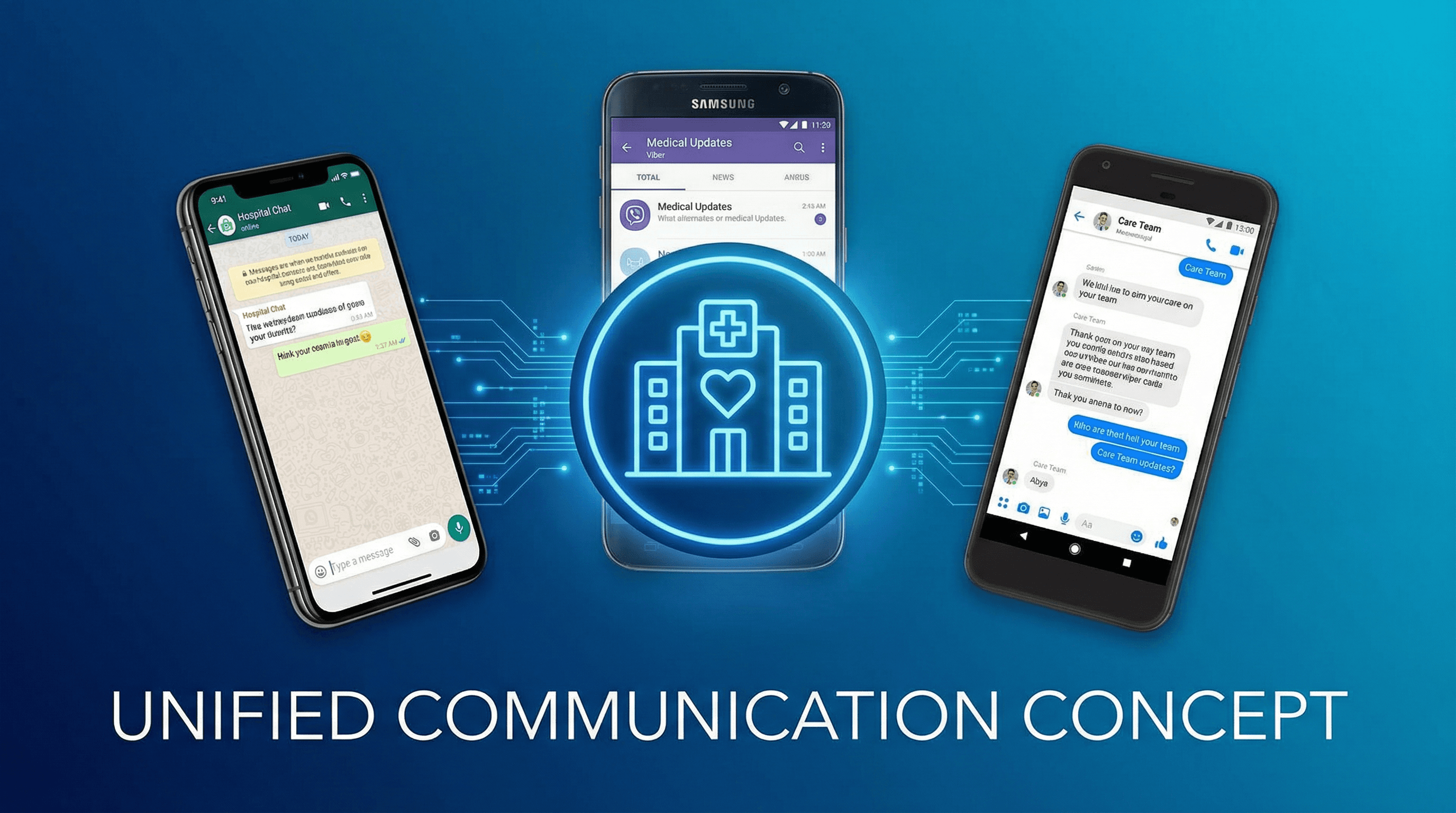
Omnichannel patient engagement platform dashboard

Omnichannel Patient Engagement: Beyond WhatsApp in Healthcare

The patient experience team at St. Luke's Medical Center in Manila had a mystery on their hands.

They'd implemented a WhatsApp chatbot and were seeing great results—80% of Singaporean patients engaged, high satisfaction scores, reduced call volumes. But their Filipino patients? Only 40% engagement. What were they doing wrong?

Then someone checked the numbers more carefully. Filipino patients weren't ignoring the hospital—they were just using a different app. When the team looked at their Facebook page, they found hundreds of unread patient messages in Messenger. Viber showed a similar story.

"We'd built this beautiful WhatsApp system," admits the Patient Experience Director, "and completely missed where half our patients actually were."

This is the omnichannel problem in healthcare: your patients aren't on one channel. They're everywhere. And if you're only in one place, you're invisible to everyone else.

The Channel Fragmentation Reality

Southeast Asian healthcare faces a unique challenge. Unlike the US or Europe, where SMS or email might dominate, Asia is a patchwork of messaging preferences:

Country#1 App#2 App#3 App
SingaporeWhatsAppTelegramSMS
PhilippinesViberMessengerWhatsApp
ThailandLINEMessengerWhatsApp
IndonesiaWhatsAppTelegramInstagram
MalaysiaWhatsAppTelegramSMS

A hospital that only supports WhatsApp in the Philippines is ignoring 60% of the market. A clinic in Thailand without LINE might as well not exist digitally.

But channel fragmentation is just the beginning of the problem.

The Real Cost of Channel Silos

Here's what happens when hospitals manage each channel separately:

The Repeated Information Problem

Mrs. Santos starts a conversation on Facebook Messenger asking about colonoscopy pricing. The next day, she follows up on WhatsApp. Different staff member. She explains everything again. A week later, she calls to book. Third person. She repeats her story a third time.

By the time she actually schedules the appointment, she's frustrated—and she hasn't even arrived at the hospital yet.

The Inconsistent Experience Problem

The WhatsApp team tells patients one thing about pricing. The call center says something different. Facebook inquiries get a third version. Patients lose trust. Staff get confused.

One hospital discovered they were quoting three different prices for the same procedure depending on which channel patients used to ask.

The Missed Handoff Problem

A patient expresses concern on Instagram DM about a suspicious mole. The social media team responds with generic information. The patient never books an appointment. Three months later, they're diagnosed with melanoma at another hospital.

"If we'd had proper escalation," the clinic director said later, "we would have caught that concern and converted it to a consultation."

The Analytics Blindspot

When channels are siloed, you can't see the full patient journey. Did that Facebook inquiry ever book an appointment? Did the WhatsApp reminder prevent a no-show? You're measuring fragments instead of outcomes.

What True Omnichannel Looks Like

Let me show you the difference through one patient's journey:

The Siloed Experience (Before)

Day 1: Maya, 28, sees an Instagram ad for fertility consultations. She sends a DM asking about costs. No response for 3 days.

Day 4: She gets a generic reply directing her to the website. She checks the website but can't find pricing.

Day 5: She messages the hospital's Facebook page. Different team, starts from scratch. "What treatments are you interested in?"

Day 7: Finally gets information. Tries to book via WhatsApp (the booking system). Has to provide her details again.

Day 8: Calls to confirm the appointment. Call center has no record of her online conversations.

Result: 8 days of frustration. Maya almost gave up twice. The hospital has no idea how close they came to losing her.

The Omnichannel Experience (After)

Day 1: Maya sends an Instagram DM. The AI recognizes this as a fertility inquiry and responds immediately with relevant information and an offer to discuss privately.

Day 1 (2 hours later): Maya says she'd prefer WhatsApp for privacy. The AI sends her a WhatsApp link with all her conversation context intact. No need to repeat anything.

Day 1 (evening): On WhatsApp, Maya asks detailed questions. The AI answers what it can and offers to connect her with a fertility nurse for personal consultation.

Day 2: Maya books a consultation through WhatsApp. She gets immediate confirmation with calendar integration.

Day 5: Automated WhatsApp reminder with preparation instructions.

Day 7: Maya arrives at the hospital. The receptionist knows her from the system and greets her by name.

Result: 2 days from inquiry to booking. Seamless experience. Maya tells three friends about how easy it was.

Building Your Omnichannel System

Creating true omnichannel engagement requires more than just being present on multiple apps. You need three essential components:

1. Unified Patient View

Every staff member and AI system should see the complete patient picture:

  • All conversations, regardless of channel
  • All appointments (past, present, future)
  • All interactions (calls, visits, messages)
  • All preferences (communication channel, language, time preferences)

When Mrs. Chen messages on Viber asking about her mother's test results, the system should already know who her mother is, when she was last seen, and that results are ready for pickup.

2. Seamless Channel Switching

Patients should be able to start on one channel and continue on another without repeating themselves.

The practical implementation:

  • Facebook inquiry → Convert to WhatsApp for privacy
  • Website chat → Continue on patient's preferred app
  • Any channel → Escalate to phone when needed

The key: conversation context travels with the patient, not stays with the channel.

3. Consistent AI Intelligence

Whether a patient messages on WhatsApp, Viber, or Telegram, they should get the same intelligent responses. This means:

  • One AI brain powering all channels
  • Channel-appropriate formatting (SMS stays short, WhatsApp can be richer)
  • Consistent escalation rules (urgent symptoms get flagged everywhere)
  • Unified training (improve AI on one channel, it improves everywhere)

Channel-Specific Strategies That Work

WhatsApp: The Primary Engine

For most Southeast Asian hospitals, WhatsApp is the workhorse. Use it for:

  • Appointment booking and management
  • Pre-admission instructions
  • Post-care follow-up
  • Lab results notification
  • PROM collection

Pro tip: Use WhatsApp templates strategically. Proactive messages (reminders, results notifications) must use approved templates. Conversational responses within 24 hours can be more flexible.

Viber: The Philippines Powerhouse

If you serve Filipino patients, Viber is non-negotiable. It's not just popular—it's essential.

One Manila clinic found that switching their primary channel from WhatsApp to Viber increased engagement from 35% to 78%.

Pro tip: Viber's lower messaging costs make it ideal for higher-volume outreach like health campaigns and community building.

Messenger & Instagram: The Discovery Channels

These Meta platforms are where patients find you before they become patients. Use them for:

  • Responding to ad inquiries
  • Handling basic FAQs
  • Capturing leads
  • Building brand awareness

Pro tip: Don't try to do everything on these platforms. Provide quick, helpful responses and offer to continue the conversation on WhatsApp for anything sensitive or complex.

Telegram: The Tech-Forward Choice

Telegram users skew younger and more tech-savvy. It's excellent for:

  • Health communities and support groups
  • Broadcast channels for health tips
  • Tech-forward clinics targeting younger demographics

Pro tip: Telegram's bot platform is powerful. You can build sophisticated automation that rivals what's possible on WhatsApp.

SMS: The Universal Fallback

Never underestimate SMS. Not everyone has WhatsApp. Elderly patients may not have smartphones. Some critical messages need guaranteed delivery.

Use SMS for:

  • Critical appointment reminders
  • Reaching patients who don't respond on other channels
  • Regulatory-required notifications

Pro tip: Keep SMS short and actionable. Include a call to action ("Reply Y to confirm") but don't expect lengthy conversations.

Measuring What Matters

With omnichannel engagement, you finally get visibility into the complete patient journey:

Journey Metrics

  • Time from first inquiry to booking
  • Channel switches per patient
  • Conversion rate by entry channel
  • Drop-off points in the journey

Channel Performance

  • Response rates per channel
  • Resolution rates per channel
  • Cost per interaction per channel
  • Patient satisfaction per channel

Business Impact

  • Total inquiries across all channels
  • Appointment bookings attributed to digital engagement
  • Revenue influenced by omnichannel engagement
  • Patient lifetime value by acquisition channel

One hospital discovered that patients who started on Facebook and converted to WhatsApp had 2.3x higher lifetime value than patients who only used WhatsApp. The discovery phase mattered more than they realized.

The Implementation Journey

Month 1-2: Foundation

  • Deploy unified platform
  • Connect your primary channel (usually WhatsApp)
  • Integrate with appointment and patient systems
  • Train staff on unified dashboard

Month 3-4: Expansion

  • Add secondary channels based on your market
  • Build cross-channel workflows
  • Implement proper analytics tracking
  • Start measuring journey metrics

Month 5-6: Optimization

  • Deploy AI automation across all channels
  • Implement predictive channel selection
  • Refine based on performance data
  • Scale what's working

The Future Is Already Here

The hospitals that get omnichannel right have an insurmountable advantage:

  • They capture patients that competitors lose through channel blindspots
  • They deliver experiences that create loyalty and referrals
  • They understand journeys in ways that enable continuous improvement
  • They scale efficiently because AI works across all channels simultaneously

The hospitals still managing separate WhatsApp, Facebook, and phone teams? They're working harder and achieving less.

Your Omnichannel Readiness Check

Ask yourself:

  1. Can a patient start a conversation on one channel and continue on another without repeating themselves?
  2. Can your staff see all patient interactions in one place?
  3. Do you know which channels are actually driving appointments?
  4. Are you present on the channels your patients prefer?

If you answered "no" to any of these, you're leaving both patient satisfaction and revenue on the table.

Bot MD's omnichannel platform unifies WhatsApp, Viber, Messenger, Telegram, SMS, and more—all in one dashboard, powered by one AI brain, with complete patient journey visibility.

Book a demo to see omnichannel patient engagement in action.

Ready to Transform Your Patient Engagement?

See how Bot MD can help your hospital achieve similar results with AI-powered patient engagement.

Related Articles

Ready to boost your hospital revenue?

Book a demo to learn how we can help you automate your patient engagement to increase revenue by 20-30%