WhatsApp, Viber & Messenger: Complete Healthcare Chatbot Integration Guide
Maria's grandmother refused to use the hospital's patient portal. "Too complicated," she'd say, waving her hand dismissively at the laptop. "I'm 78. I don't need another password to remember."
But here's the thing—she sends WhatsApp messages to her grandchildren every single day. Photos of her garden. Voice notes complaining about the weather. Emoji reactions that she somehow mastered without any training.
When her hospital started accepting appointment bookings via WhatsApp, everything changed. She rescheduled her cardiology appointment herself. At 10 PM. Without asking anyone for help.
"Why didn't they do this years ago?" she asked Maria the next morning.
Good question.
The Channel That Patients Actually Use
Here's an uncomfortable truth for healthcare IT: you've probably invested millions in a patient portal that 12% of your patients use regularly. Meanwhile, 94% of them open WhatsApp every single day.
The data across Southeast Asia tells a clear story:
| Country | Primary Channel | Daily Active Rate |
|---|---|---|
| Singapore | 84% | |
| Malaysia | 91% | |
| Philippines | Messenger | 89% |
| Indonesia | 93% | |
| Thailand | LINE | 87% |
Your patients aren't going to adopt a new communication habit for healthcare. Healthcare needs to meet them where they already live.
One Patient, Five Channels: A Real Journey
Let me show you what true omnichannel looks like through one patient's experience:
Tuesday, 11 PM (Messenger)
Dewi, a 32-year-old professional in Manila, is browsing the hospital's Facebook page while watching Netflix. She's been meaning to book a health screening for months. She clicks "Send Message" and types: "Do you offer executive health packages?"
Within 8 seconds, she gets a response explaining the options, pricing, and availability. Ten minutes later—without talking to a human—she's booked a comprehensive screening for Saturday morning.
Friday, 6 PM (SMS)
Dewi receives an SMS reminder: "Your health screening is tomorrow at 8 AM. Reply YES to confirm or RESCHEDULE to change."
She confirms with one word.
Friday, 9 PM (WhatsApp)
A WhatsApp message arrives with detailed preparation instructions: fasting requirements, what to bring, where to park, what to wear. The message includes a map pin for the diagnostic center.
Saturday, 2 PM (WhatsApp)
After her screening, Dewi has a question about when results will be available. She messages on WhatsApp—the same conversation thread from the night before. The AI remembers her, knows she just completed screening, and tells her results will be available in 48 hours with a link to schedule a review consultation.
Monday, 10 AM (Email)
Results are ready. An email notification arrives with a secure link. Dewi books a Zoom consultation with a doctor directly from the results page.
Wednesday, 4 PM (Viber)
Her doctor's office follows up via Viber—Dewi's preferred channel for personal matters—with post-consultation recommendations and a prescription refill reminder set for 30 days later.
One patient. Five channels. One seamless experience. Every interaction informed by the last.
Why WhatsApp Dominates Healthcare Messaging
When Mount Elizabeth Hospital first deployed WhatsApp for patient communication, the results surprised even the optimists:
- 95% message open rate (compared to 20% for email)
- 3-minute average response time from patients
- 67% of bookings happened outside business hours
- Patient satisfaction scores increased 23%
WhatsApp works for healthcare because:
Patients trust it. They already share sensitive family information there. A message from their hospital feels natural, not intrusive.
It's instant. When Mrs. Wong receives her lab results notification, she sees it within minutes—not buried in an inbox she checks weekly.
It's conversational. Patients can ask follow-up questions. They can send photos of their medication bottles. They can voice-note their symptoms when typing feels like too much effort.
It's encrypted. End-to-end encryption means patient data stays private—more secure than email, which most healthcare organizations still use routinely.
The 24-Hour Window Challenge (And How to Solve It)
WhatsApp Business API has a quirk: you can only send free-form messages within 24 hours of the patient's last message. After that, you need approved template messages.
Smart hospitals work around this:
Proactive templates for appointment reminders, lab results, and follow-up prompts—all pre-approved, professionally written, and personalized with patient names and appointment details.
Conversation starters that encourage patients to respond, reopening the 24-hour window naturally.
Strategic timing so important messages arrive when patients are likely to engage.
The Viber Advantage (Where WhatsApp Isn't King)
In the Philippines, parts of Eastern Europe, and certain Middle Eastern countries, Viber dominates. A hospital that only offers WhatsApp is invisible to a significant patient segment.
Viber offers features WhatsApp doesn't:
No messaging window restrictions. You can message patients anytime without the 24-hour limitation.
Communities. Support groups for cancer patients, new parents, chronic disease management—moderated spaces where patients help each other.
Richer media. Video support that works better for patient education content.
A hospital in Cebu discovered that switching their reminder channel from SMS to Viber increased confirmation rates by 40%—simply because patients actually saw the messages.
Messenger: The Facebook Funnel
Here's something interesting: 40% of new patient inquiries at private hospitals start on Facebook. They see an ad, visit the page, and click "Send Message."
If nobody responds for 8 hours because it's nighttime, that potential patient has likely messaged two competitors.
AI on Messenger changes this equation:
Instant response, always. Even at 2 AM, even on holidays.
Qualification before handoff. The AI gathers basic information—what they're looking for, their insurance situation, their preferred location—before a human ever gets involved.
Seamless booking. Patients can book appointments without leaving Messenger.
A fertility clinic in Singapore found that 28% of their new patient consultations originated from late-night Messenger conversations that AI handled while staff slept.
SMS: The Channel Nobody Wants to Talk About
It's not sexy. It doesn't support rich media. It feels old-fashioned.
And yet: 98% open rate. No other channel comes close.
SMS is the universal fallback—the channel that reaches everyone, including:
- Elderly patients who don't use smartphones
- Rural patients with poor internet connectivity
- Patients whose phones are full and can't install apps
- Critical communications that absolutely must be seen
Smart hospitals use SMS strategically:
Appointment reminders 24 hours before—short, clear, actionable.
Emergency notifications when something urgent needs attention.
Two-factor authentication for patient portal access.
Backup channel when patients don't respond on primary platforms.
The best omnichannel strategies don't abandon SMS. They use it as the reliable foundation underneath flashier channels.
Building True Omnichannel (Not Just Multi-Channel)
Here's the difference that matters:
Multi-channel: You offer WhatsApp AND Messenger AND SMS. Each operates independently.
Omnichannel: Patient starts on Messenger, continues on WhatsApp, confirms via SMS—and the conversation history follows them. Your staff sees everything in one place.
True omnichannel requires:
Unified Patient Identity
When Mrs. Chen messages on WhatsApp and later calls, your system should know it's the same person. Her phone number, email, and patient ID all link to one profile.
Conversation Continuity
"I already explained this twice!"—the patient's curse. In true omnichannel, they never need to repeat themselves. Context carries across channels.
Channel-Intelligent Formatting
A detailed pre-procedure checklist works great on WhatsApp. On SMS, it needs to be condensed to a link. The same content, adapted for each platform's strengths.
Single Staff Dashboard
Your scheduling team shouldn't need to check four different apps. One inbox. One interface. Every channel unified.
The Implementation Roadmap
Based on dozens of hospital deployments across Southeast Asia, here's what actually works:
Month 1: Primary Channel
Start with the channel your patients use most. In Malaysia, that's WhatsApp. In the Philippines, probably Messenger. Deploy, learn, iterate.
Month 2: Measure and Optimize
Track everything: response rates, resolution rates, patient satisfaction, staff efficiency. Identify what's working and what needs adjustment.
Month 3-4: Add Second Channel
Expand to your secondary channel. Use learnings from month one to accelerate deployment.
Month 5+: Full Omnichannel
Add remaining channels. Focus on cross-channel continuity. Train staff on unified workflows.
Ongoing: Patient Choice
Let patients set preferences. Some prefer WhatsApp for everything. Others want SMS reminders but WhatsApp for conversations. Honor their choices.
The Compliance Reality
Every channel has specific compliance requirements. Here's what matters:
WhatsApp: End-to-end encrypted. Data stored by Meta. HIPAA compliance requires Business API (not regular WhatsApp) plus additional controls.
Messenger: Not end-to-end encrypted by default. More compliance burden for sensitive information.
SMS: Travels through carrier networks. Not encrypted. Use for reminders, not clinical data.
All channels: Consent documentation, message retention policies, audit trails, access controls.
A compliant omnichannel implementation isn't just about technology—it's about governance, policies, and training.
What Results Look Like
Hospitals that implement true omnichannel see:
| Metric | Before | After |
|---|---|---|
| Average response time | 4+ hours | <2 minutes |
| After-hours booking | 0% | 35% of total |
| Patient satisfaction | 72 NPS | 89 NPS |
| No-show rate | 22% | 11% |
| Staff efficiency | Baseline | +45% |
The ROI isn't subtle. It's dramatic and measurable.
Your Patients Are Already Waiting
Right now, as you read this, someone is trying to contact your hospital on WhatsApp. Someone else is messaging on Facebook and wondering why nobody responds.
Every hour without omnichannel is patient experience debt accumulating.
Bot MD provides true omnichannel patient engagement with:
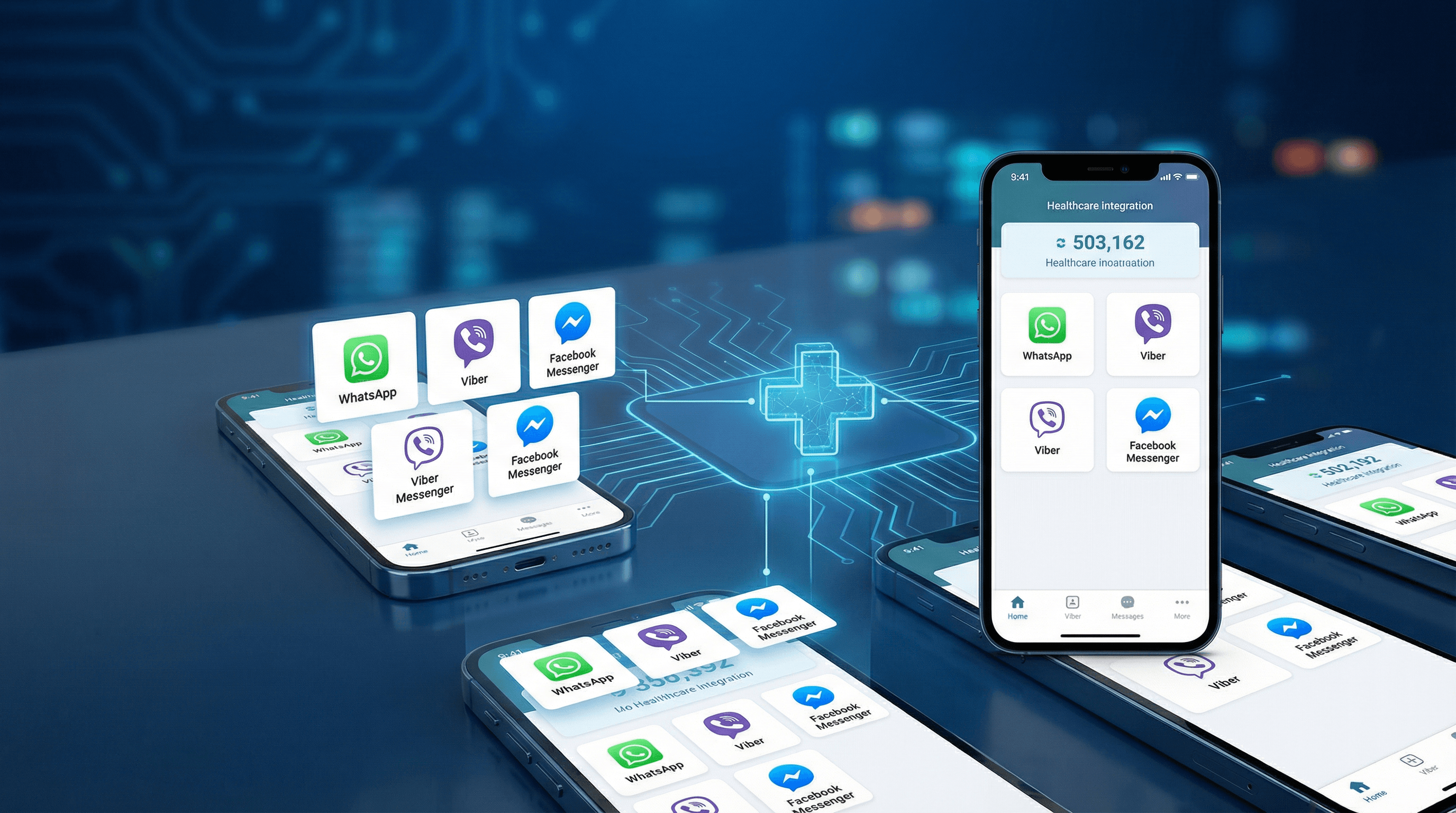
- One integration connecting WhatsApp, Viber, Messenger, Telegram, LINE, and SMS
- Unified patient profiles that follow conversations across channels
- Healthcare-trained AI that sounds human, not robotic
- Single dashboard for your entire team
- Regional compliance built in—HIPAA, PDPA, and local requirements
Book a demo to see how hospitals across Southeast Asia are meeting patients where they already are—and why patients are responding.
Maria's grandmother is waiting on WhatsApp. What are you going to tell her?